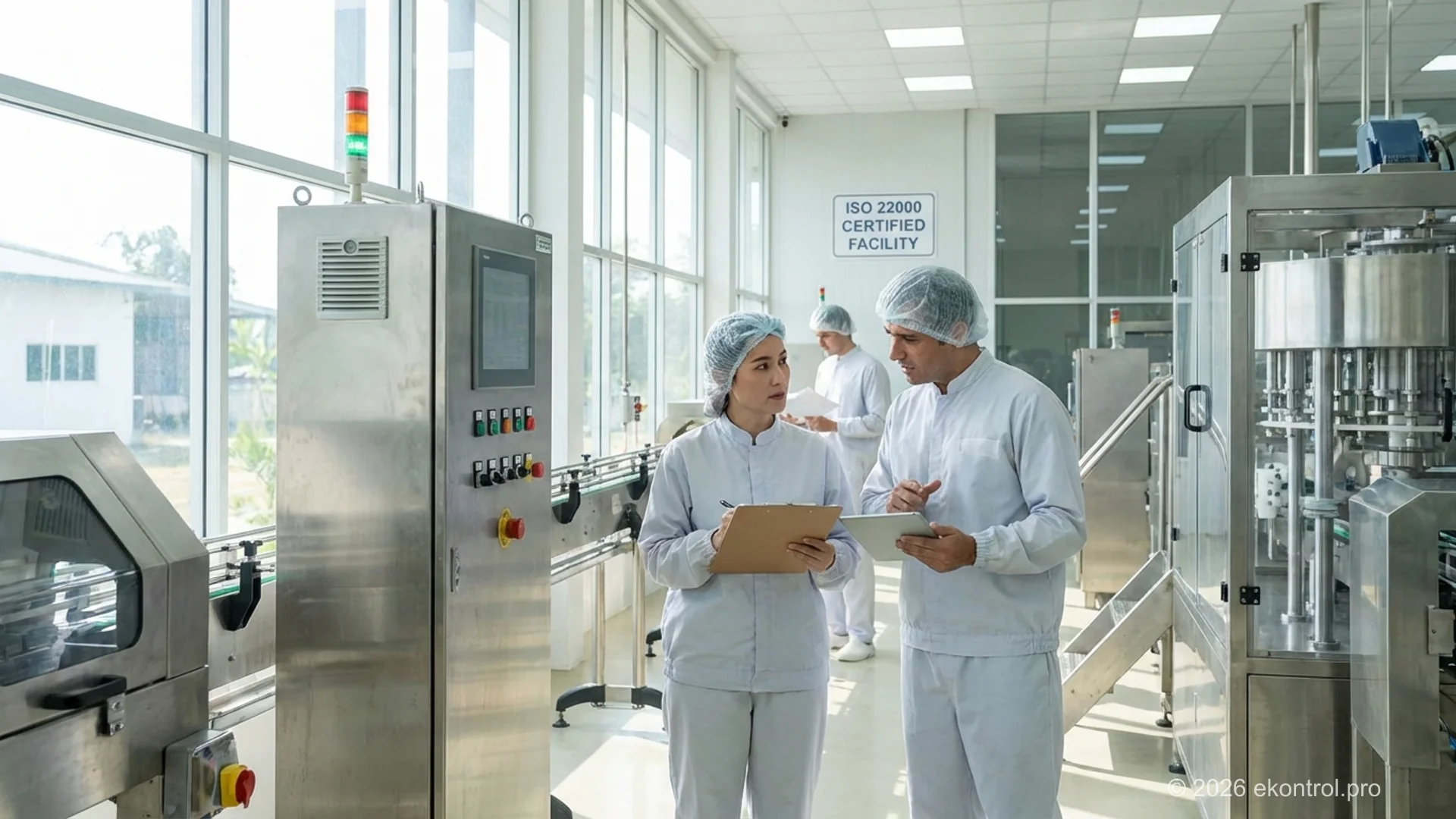
Why Organics Are Now in Ukraine's Focus
For Ukraine, organic production is not just about consumer trends. It is about trust, transparency, and added value — factors that are especially important in the context of reconstruction. After the war, the agricultural sector must become one of the economy's driving forces, while simultaneously preserving soil fertility, supporting employment in communities, and building stable supply chains. Organics provide an opportunity to develop this model more responsibly and sustainably.
When a country is recovering, every hryvnia of investment must work as efficiently as possible. Organic projects often involve small and medium-sized businesses, cooperatives, processing facilities, and local brands. This means that added value stays in the regions rather than leaving with raw materials. That is precisely why a certification system is not bureaucracy for the sake of reports — it is the foundation of trust between the producer, the consumer, and the state.
To put it simply, organic certification is a way to confirm: we grow and produce honestly, according to transparent rules. For Ukraine, which is rebuilding its reputation and economy, this is just as important as new roads or energy infrastructure.
It is also worth noting that organics is not about rejecting modern technology. It is about discipline in choosing methods, attention to the condition of the land, and concern for people's health. When a producer follows clear rules and operates transparently, it becomes easier to attract partners, credit programs, and grants. That is why certification is an investment in reputation, not a box-ticking exercise.
What the Government Approved and When
On October 21, 2020, the Cabinet of Ministers of Ukraine approved the Procedure for Certification of Organic Production and/or Circulation of Organic Products. This step represents a simple yet important development: Ukraine established its own organic certification system rather than relying solely on the rules of other countries.
The resolution defined certification requirements, rules for issuing certificates and their duplicates, and approved the document format. In parallel, amendments were made to the 2019 government procedure to clearly specify documentation requirements for producers' activities. In other words, certification became not an abstract concept but a process with specific rules and transparent requirements.
For the industry, this was an important signal: the state is taking responsibility for organic quality and creating a clear framework for market development. Today, in the context of reconstruction, these decisions serve as a foundation for long-term investment and restoring trust in Ukraine's agricultural sector.
For the market, this also means a common language between producers, traders, retailers, and consumers. When everyone understands what organic status means and how it is verified, speculation and pricing chaos disappear. This is an invisible but highly practical outcome of systemic decisions.
How Certification Works in Simple Terms
Certification is an independent verification that confirms a product is genuinely organic. In simple terms, it is a "trust passport" for a product. The producer does not merely declare that they operate without prohibited substances — they prove it through documentation, technologies, and controls.
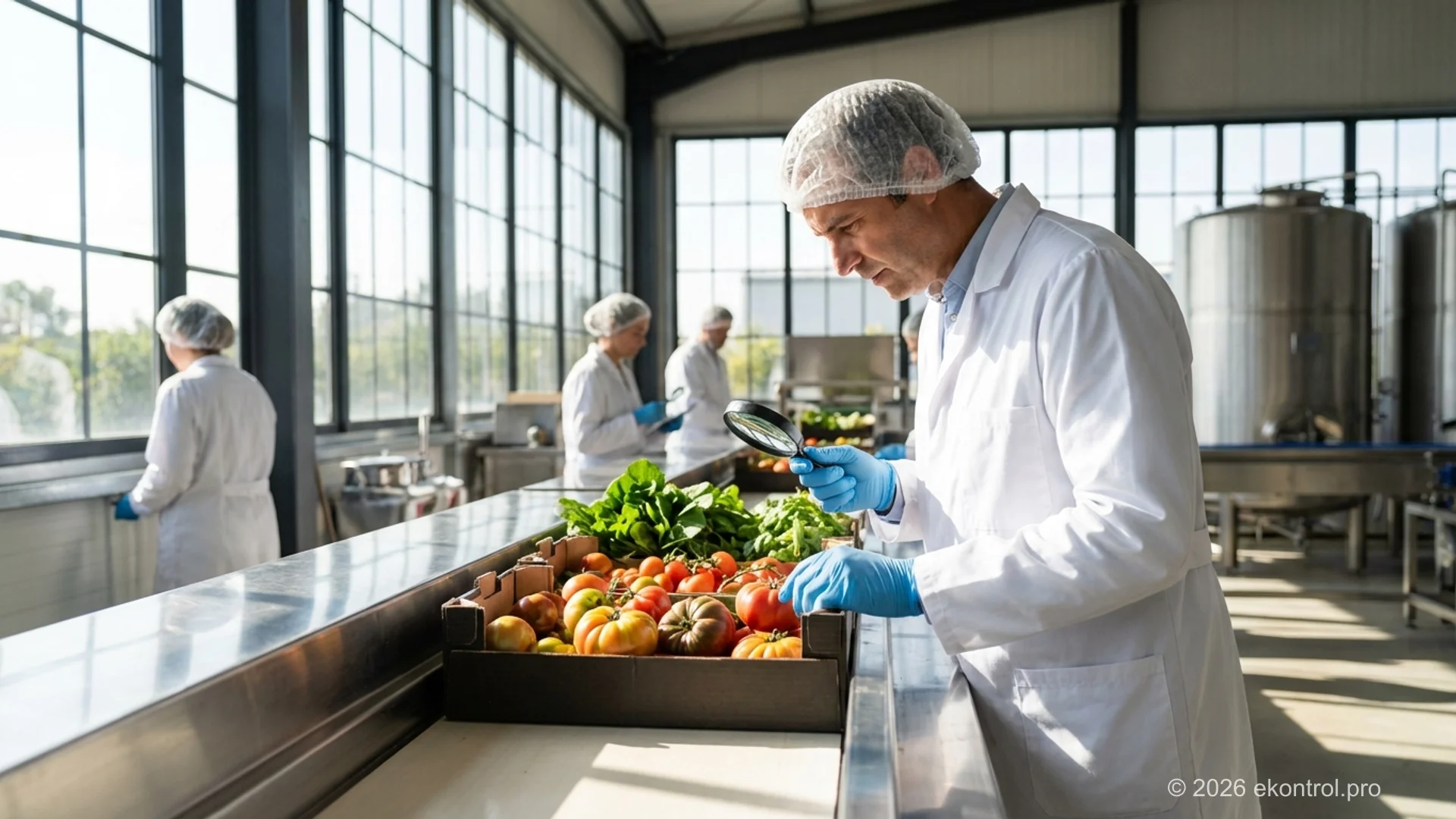
In practical terms, the process looks like this: the producer submits an application to a certification body, agrees on a production plan, and maintains records of raw material origin, field management, seeds, feed, fertilizers, storage, and logistics. This is followed by inspections — an inspector examines fields, warehouses, production facilities, and documentation, and may order laboratory testing if necessary.
The key idea is traceability. It must be clear where the raw materials came from, how they were processed, where they were stored, and how they became the final product. When this chain is transparent, the organic label becomes not just a pretty sticker but a genuine quality guarantee.
There is another stage that is often overlooked — the transition period. If a farm previously operated in a conventional mode, it needs time to change its practices and "cleanse" its processes of prohibited substances. During this time, the product may carry special labeling that honestly informs the buyer about the stage the producer is at.
What This Means for Producers
For a farmer or processor, certification is not just about control — it is a clear pathway to a market with higher added value. Yes, it requires more record-keeping and greater discipline in documentation, but in return it opens access to new buyers, more stable contracts, and a stronger reputation.
In short, a producer needs to:
- record raw material origins and product movement;
- separate organic and non-organic flows;
- have transparent rules for storage, transportation, and processing;
- work with verified suppliers;
- be prepared for regular inspections.
The reward for this discipline is trust. For small businesses, it also means the opportunity to form cooperatives, create local brands, and reach store shelves with a story that is easy to explain to the buyer. Ultimately, certification turns organics from a risk into a manageable business process.
Another practical consideration is team preparation. Certification does not work when knowledge resides only with the owner. It is important that the agronomist, technologist, warehouse, and logistics teams all follow the same rules. Often, a simple set of internal instructions and checklists helps — it eliminates chaos and makes audits less stressful.
Exports and Trust: Why a National System Matters
Ukraine has long been a supplier of organic products to foreign markets. Previously, many producers were certified under the rules of other countries, primarily the EU. A national system does not eliminate the need to meet partner requirements, but it gives the country a strong internal foundation.
When national rules exist that are clear to both business and the state, it becomes easier to regulate the market, combat unfair practices, and protect the "organic Ukraine" brand. This also simplifies dialogue with investors and donors: they see not just individual certificates but a systemic approach to quality.
For exports, this means greater transparency and predictability. For the domestic market, it means less confusion when consumers do not understand what an organic product is and why it costs more. A national system makes this chain of trust complete.
A national system is also needed to develop domestic demand. When clear criteria exist, it becomes easier to launch educational campaigns, dedicated store shelves, or voluntary procurement programs for social institutions. The keyword here is transparency: the market grows only when consumers understand the rules of the game.
Post-War Recovery: How Organics Support Communities
Reconstruction is not just about concrete and machinery. It is about reviving local economies. Organic production can become one of the practical tools for this, because it works wherever there is land, people, and the desire to build a long-term business.
Organics give regions the chance to create jobs and develop processing capacity. When a farmer does not just sell grain but produces certified organic products, the value stays in the community. This can be local cereals, oil, dairy products, honey — everything that shapes a territory's identity.
Such projects often weather crises better because they have higher margins and a focus on quality. Moreover, they naturally align with ecosystem restoration, which is important for the long-term health of the land. For Ukraine, this means economic resilience, export opportunities, and strong regions that do not depend on one or two large employers.
Organic practices also stimulate soil fertility restoration — a strategic resource that cannot be recovered in a single season. For a country building its economy for decades ahead, soil preservation is critically important. Therefore, investing in organics is investing in a resource on which food security and long-term price stability depend.
The Role of Government, Certification Bodies, and Education
For the system to work, there must be trust in certification bodies and a clear government policy. The state must set the rules of the game, monitor compliance, and support producers where an initial push is needed. Back in 2020, partial reimbursement of certification costs from the state budget was already discussed — demonstrating a strategic commitment to organics.
A separate area is human resources. Inspectors, auditors, technologists, quality managers — without them, certification remains just a "piece of paper." Training programs, practical courses, and business consultations are needed, especially for small and medium-sized enterprises.
Finally, there is communication. If consumers do not understand what organics are and why they matter, the market will not grow. This requires joint efforts from business, the state, and professional communities.
Equally important is the independence of certification bodies. If inspections are perceived as a formality, the market quickly loses trust. Therefore, clear accreditation criteria, regular oversight, and transparent appeal mechanisms are essential. This may sound dry, but it is precisely such things that shape a country's reputation on the international market.
Risks and How to Mitigate Them
Any system survives as long as trust exists. The main risk for the organic market is "fake organics" — when products are falsely labeled. Another risk is overly complex rules for small businesses, which may discourage producers. There is also the risk of "paper" certification without real oversight.
What can be done about this? First, maintain a high standard of inspections and accountability. Second, make the rules clear rather than convoluted. Third, support producers with consultations and simple digital tools for record-keeping.
It is also important to be honest with the market: organics cannot be too cheap because the price includes the cost of oversight and more responsible production. If this is communicated openly, consumer trust grows — and with it, business stability.
There is also a financial barrier: certification has a cost, and for small farmers, it is significant. Cooperatives, group models, or development programs can help here. Otherwise, the organic market risks becoming "elitist," which contradicts the idea of community recovery and access to quality food.
Need a consultation on organic certification?
We will explain the requirements, help you prepare for the audit, and build a transparent production system.
Submit a requestConclusion
The approval of a national organic production certification system is an important step for Ukraine. It makes the market more transparent, gives producers clear rules, and strengthens trust in Ukrainian organics on both domestic and international markets.
In the post-war period, this decision carries even greater weight. Organics can become one of the tools for community economic recovery, export development, and strengthening Ukraine's reputation as a reliable supplier of quality products. Most importantly, this is a path that allows building the future not on short-term cycles but on responsibility and long-term value.
In practical terms, this means that every certified producer becomes part of a bigger story — a story about reconstruction, fair competition, and responsible use of resources. It is not a quick path, but it delivers results that hold up over the long run and make Ukrainian products recognizable.
For businesses, it is also a way to enter longer-term contracts legally and transparently, and for the state — an opportunity to build policies that work for people, not for reports.
Tags
Need a certification consultation?
Free ConsultationOn This Page
- Why Organics Are Now in Ukraine's Focus
- What the Government Approved and When
- How Certification Works in Simple Terms
- What This Means for Producers
- Exports and Trust: Why a National System Matters
- Post-War Recovery: How Organics Support Communities
- The Role of Government, Certification Bodies, and Education
- Risks and How to Mitigate Them
- Conclusion
Why Organics Are Now in Ukraine's Focus
For Ukraine, organic production is not just about consumer trends. It is about trust, transparency, and added value — factors that are especially important in the context of reconstruction. After the war, the agricultural sector must become one of the economy's driving forces, while simultaneously preserving soil fertility, supporting employment in communities, and building stable supply chains. Organics provide an opportunity to develop this model more responsibly and sustainably.
When a country is recovering, every hryvnia of investment must work as efficiently as possible. Organic projects often involve small and medium-sized businesses, cooperatives, processing facilities, and local brands. This means that added value stays in the regions rather than leaving with raw materials. That is precisely why a certification system is not bureaucracy for the sake of reports — it is the foundation of trust between the producer, the consumer, and the state.
To put it simply, organic certification is a way to confirm: we grow and produce honestly, according to transparent rules. For Ukraine, which is rebuilding its reputation and economy, this is just as important as new roads or energy infrastructure.
It is also worth noting that organics is not about rejecting modern technology. It is about discipline in choosing methods, attention to the condition of the land, and concern for people's health. When a producer follows clear rules and operates transparently, it becomes easier to attract partners, credit programs, and grants. That is why certification is an investment in reputation, not a box-ticking exercise.
What the Government Approved and When
On October 21, 2020, the Cabinet of Ministers of Ukraine approved the Procedure for Certification of Organic Production and/or Circulation of Organic Products. This step represents a simple yet important development: Ukraine established its own organic certification system rather than relying solely on the rules of other countries.
The resolution defined certification requirements, rules for issuing certificates and their duplicates, and approved the document format. In parallel, amendments were made to the 2019 government procedure to clearly specify documentation requirements for producers' activities. In other words, certification became not an abstract concept but a process with specific rules and transparent requirements.
For the industry, this was an important signal: the state is taking responsibility for organic quality and creating a clear framework for market development. Today, in the context of reconstruction, these decisions serve as a foundation for long-term investment and restoring trust in Ukraine's agricultural sector.
For the market, this also means a common language between producers, traders, retailers, and consumers. When everyone understands what organic status means and how it is verified, speculation and pricing chaos disappear. This is an invisible but highly practical outcome of systemic decisions.
How Certification Works in Simple Terms
Certification is an independent verification that confirms a product is genuinely organic. In simple terms, it is a "trust passport" for a product. The producer does not merely declare that they operate without prohibited substances — they prove it through documentation, technologies, and controls.
In practical terms, the process looks like this: the producer submits an application to a certification body, agrees on a production plan, and maintains records of raw material origin, field management, seeds, feed, fertilizers, storage, and logistics. This is followed by inspections — an inspector examines fields, warehouses, production facilities, and documentation, and may order laboratory testing if necessary.
The key idea is traceability. It must be clear where the raw materials came from, how they were processed, where they were stored, and how they became the final product. When this chain is transparent, the organic label becomes not just a pretty sticker but a genuine quality guarantee.
There is another stage that is often overlooked — the transition period. If a farm previously operated in a conventional mode, it needs time to change its practices and "cleanse" its processes of prohibited substances. During this time, the product may carry special labeling that honestly informs the buyer about the stage the producer is at.
What This Means for Producers
For a farmer or processor, certification is not just about control — it is a clear pathway to a market with higher added value. Yes, it requires more record-keeping and greater discipline in documentation, but in return it opens access to new buyers, more stable contracts, and a stronger reputation.
In short, a producer needs to:
- record raw material origins and product movement;
- separate organic and non-organic flows;
- have transparent rules for storage, transportation, and processing;
- work with verified suppliers;
- be prepared for regular inspections.
The reward for this discipline is trust. For small businesses, it also means the opportunity to form cooperatives, create local brands, and reach store shelves with a story that is easy to explain to the buyer. Ultimately, certification turns organics from a risk into a manageable business process.
Another practical consideration is team preparation. Certification does not work when knowledge resides only with the owner. It is important that the agronomist, technologist, warehouse, and logistics teams all follow the same rules. Often, a simple set of internal instructions and checklists helps — it eliminates chaos and makes audits less stressful.
Exports and Trust: Why a National System Matters
Ukraine has long been a supplier of organic products to foreign markets. Previously, many producers were certified under the rules of other countries, primarily the EU. A national system does not eliminate the need to meet partner requirements, but it gives the country a strong internal foundation.
When national rules exist that are clear to both business and the state, it becomes easier to regulate the market, combat unfair practices, and protect the "organic Ukraine" brand. This also simplifies dialogue with investors and donors: they see not just individual certificates but a systemic approach to quality.
For exports, this means greater transparency and predictability. For the domestic market, it means less confusion when consumers do not understand what an organic product is and why it costs more. A national system makes this chain of trust complete.
A national system is also needed to develop domestic demand. When clear criteria exist, it becomes easier to launch educational campaigns, dedicated store shelves, or voluntary procurement programs for social institutions. The keyword here is transparency: the market grows only when consumers understand the rules of the game.
Post-War Recovery: How Organics Support Communities
Reconstruction is not just about concrete and machinery. It is about reviving local economies. Organic production can become one of the practical tools for this, because it works wherever there is land, people, and the desire to build a long-term business.
Organics give regions the chance to create jobs and develop processing capacity. When a farmer does not just sell grain but produces certified organic products, the value stays in the community. This can be local cereals, oil, dairy products, honey — everything that shapes a territory's identity.
Such projects often weather crises better because they have higher margins and a focus on quality. Moreover, they naturally align with ecosystem restoration, which is important for the long-term health of the land. For Ukraine, this means economic resilience, export opportunities, and strong regions that do not depend on one or two large employers.
Organic practices also stimulate soil fertility restoration — a strategic resource that cannot be recovered in a single season. For a country building its economy for decades ahead, soil preservation is critically important. Therefore, investing in organics is investing in a resource on which food security and long-term price stability depend.
The Role of Government, Certification Bodies, and Education
For the system to work, there must be trust in certification bodies and a clear government policy. The state must set the rules of the game, monitor compliance, and support producers where an initial push is needed. Back in 2020, partial reimbursement of certification costs from the state budget was already discussed — demonstrating a strategic commitment to organics.
A separate area is human resources. Inspectors, auditors, technologists, quality managers — without them, certification remains just a "piece of paper." Training programs, practical courses, and business consultations are needed, especially for small and medium-sized enterprises.
Finally, there is communication. If consumers do not understand what organics are and why they matter, the market will not grow. This requires joint efforts from business, the state, and professional communities.
Equally important is the independence of certification bodies. If inspections are perceived as a formality, the market quickly loses trust. Therefore, clear accreditation criteria, regular oversight, and transparent appeal mechanisms are essential. This may sound dry, but it is precisely such things that shape a country's reputation on the international market.
Risks and How to Mitigate Them
Any system survives as long as trust exists. The main risk for the organic market is "fake organics" — when products are falsely labeled. Another risk is overly complex rules for small businesses, which may discourage producers. There is also the risk of "paper" certification without real oversight.
What can be done about this? First, maintain a high standard of inspections and accountability. Second, make the rules clear rather than convoluted. Third, support producers with consultations and simple digital tools for record-keeping.
It is also important to be honest with the market: organics cannot be too cheap because the price includes the cost of oversight and more responsible production. If this is communicated openly, consumer trust grows — and with it, business stability.
There is also a financial barrier: certification has a cost, and for small farmers, it is significant. Cooperatives, group models, or development programs can help here. Otherwise, the organic market risks becoming "elitist," which contradicts the idea of community recovery and access to quality food.
Need a consultation on organic certification?
We will explain the requirements, help you prepare for the audit, and build a transparent production system.
Submit a requestConclusion
The approval of a national organic production certification system is an important step for Ukraine. It makes the market more transparent, gives producers clear rules, and strengthens trust in Ukrainian organics on both domestic and international markets.
In the post-war period, this decision carries even greater weight. Organics can become one of the tools for community economic recovery, export development, and strengthening Ukraine's reputation as a reliable supplier of quality products. Most importantly, this is a path that allows building the future not on short-term cycles but on responsibility and long-term value.
In practical terms, this means that every certified producer becomes part of a bigger story — a story about reconstruction, fair competition, and responsible use of resources. It is not a quick path, but it delivers results that hold up over the long run and make Ukrainian products recognizable.
For businesses, it is also a way to enter longer-term contracts legally and transparently, and for the state — an opportunity to build policies that work for people, not for reports.